
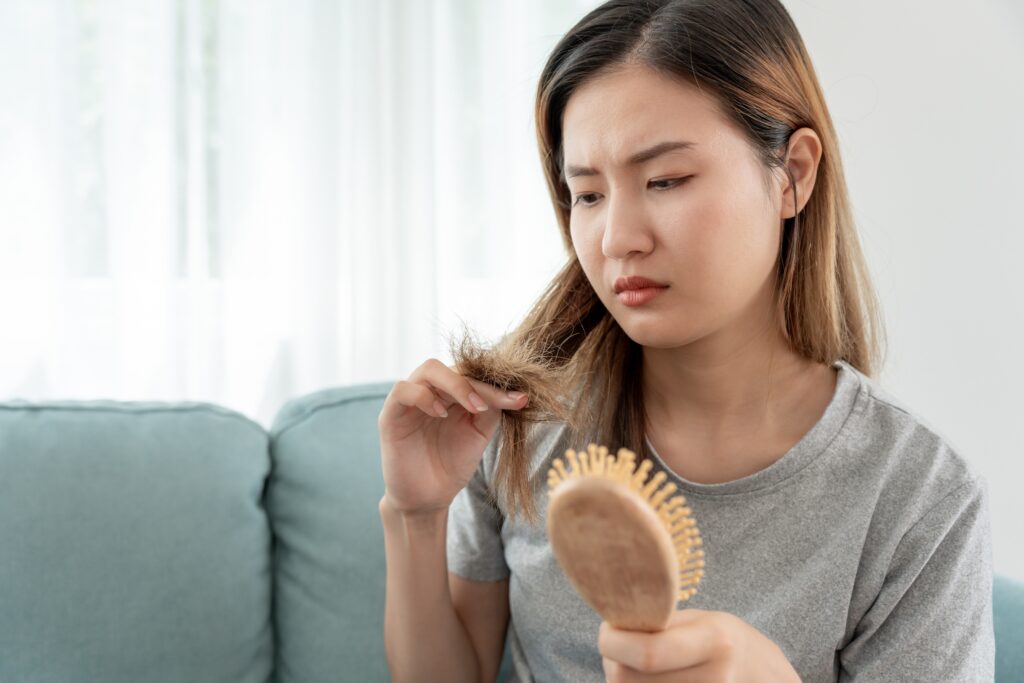




Finding more hair on your pillow, in the shower or on your hairbrush can be worrying. But before trying supplements or looking for hair regrowth treatments, it helps to understand what might be causing the shedding.
Hormonal changes, prolonged stress and nutritional deficiencies can all contribute to hair loss. The difficulty is that their effects sometimes overlap, making it challenging to identify the cause from appearance alone.
Key Takeaways
- Hormonal hair loss often develops gradually, while stress-related shedding may become noticeable months after a stressful event.
- Nutritional deficiencies can contribute to hair thinning, particularly when dietary intake or nutrient absorption is inadequate.
- More than one factor can contribute to hair loss at the same time.
- The pattern of thinning, medical history and appropriate investigations can help guide diagnosis and treatment.
Does the Pattern of Hair Loss Offer Any Clues?
Although no pattern can confirm the cause on its own, certain changes may provide useful clues.
Hormonal hair loss may develop gradually, with widening of the parting or thinning around the crown in women. In men, it commonly affects the temples and crown. These patterns can occur with androgenetic alopecia, a condition influenced by genetic susceptibility and the effects of androgens on hair follicles.
Stress-related hair loss often presents differently. Physical or emotional stress can trigger a condition called telogen effluvium, in which more hairs than usual enter the shedding phase. Instead of thinning in one specific area, you may notice increased shedding across the scalp.
Nutritional deficiencies can also cause diffuse hair thinning. Inadequate iron, insufficient protein intake and certain other nutrient deficiencies may affect the normal hair growth cycle.
However, these patterns are not definitive. A scalp assessment and, where appropriate, further investigations are needed to distinguish between possible causes.
Could Stress Be Affecting Your Hair Months Later?
One confusing aspect of stress-related hair loss is the delay between the triggering event and the visible shedding.
For example, someone who experienced a significant illness, surgery, rapid weight loss or prolonged emotional stress may not notice increased hair shedding until around two to three months later.
This delay occurs because the hair growth cycle takes time to respond to a trigger. Consequently, the cause may not be an event that happened last week, but something that occurred several months earlier.
When the trigger resolves, shedding from telogen effluvium often improves gradually. However, persistent shedding may require further assessment to check for ongoing triggers or another hair condition.
When Should You Suspect a Hormonal or Nutritional Cause?
Consider whether your hair changes coincide with other developments in your health.
Hormonal factors may be worth investigating if hair thinning occurs alongside,
- Irregular menstrual cycles or other menstrual changes.
- New or worsening acne or increased facial hair.
- Hair thinning that follows a recognisable pattern or progresses gradually.
- Changes associated with pregnancy, childbirth, menopause or thyroid dysfunction.
Nutritional factors may deserve attention if hair loss follows restrictive dieting, substantial weight loss or a period of inadequate food intake. Fatigue, weakness or other symptoms may also suggest a nutritional problem, although these symptoms have many possible causes.
These clues do not establish a diagnosis. For example, hormonal hair loss can occur without obvious hormonal symptoms, while someone with a balanced diet can still develop a deficiency because of an underlying medical condition.
Avoid taking high-dose supplements without establishing whether you need them. Excessive intake of certain nutrients can itself contribute to health problems, and some supplements may worsen hair loss.
How Is the Cause Confirmed, and What Treatment Helps?
A touch-up should be considered as a new clinical decision rather than an automatic maintenance appointment.
The doctor may review your previous treatment, examine the area and discuss your expectations before deciding what, if anything, should be done. Individual anatomy, previous procedures and the amount of existing filler can all influence the discussion.
This approach also helps avoid assuming that more filler will necessarily address every change in appearance.
Frequently Asked Questions (FAQs)
1. Can hormonal hair loss be reversed?
It depends on the underlying condition and the extent of hair follicle changes. Some forms can be managed with appropriate treatment, although results vary and treatment may need to be continued to maintain benefits.
2. How long does stress-related hair loss last?
Shedding associated with telogen effluvium often improves over several months once the trigger has resolved. If it continues or becomes more pronounced, further assessment may be needed.
3. Which vitamin deficiency causes hair loss?
Iron deficiency is one recognised contributor. Other nutritional deficiencies may also affect hair growth, depending on the circumstances. Testing can help identify whether a deficiency is present.
4. Should I take biotin or other hair supplements?
Not necessarily. Supplements are most useful when they address a confirmed deficiency or a specific clinical need. Taking them without guidance may be unnecessary, and excessive intake of some nutrients can be harmful.
5. When should I see a doctor about hair loss?
Consider seeking assessment if shedding persists, thinning progresses, or you notice bald patches, scalp inflammation, pain or other unusual symptoms. Sudden or patchy hair loss may require earlier evaluation.
Schedule a Consultation to Understand What Is Causing Your Hair Loss
Hair thinning is not always caused by a single factor, and choosing a treatment before identifying the underlying cause may delay appropriate care.
If you have noticed persistent shedding or changes in hair density, consider arranging a consultation at Ang Skin & Hair Clinic with Dr Ang Chee Beng. An assessment can help explore possible contributing factors and determine which investigations or management options may be appropriate for your circumstances.
Understanding the cause is a useful first step towards making informed decisions about your hair health.